I’m working on my first novel – as I’ve mentioned before it’s a coming of age story about a young Deaf man. I am a child of Deaf parents (CODA as we are commonly called), so some of the Deaf experience is familiar through their lives. I grew up in the 60s and 70s but my story takes place much earlier, from the Great Depression on. I’ve written quite a bit over the years, mostly short stories, essays, blog posts, but I’ve never attempted a novel. It’s something I’ve longed to do but, it always seemed that life, work, caretaking, and everything else got in the way. I retired a few years ago, went back to school to get a degree in creative writing and to my surprise, the classes helped far beyond learning about the names of literary devices or how to linguistically parse a sentence, or write a literary analysis. All those classes helped me shape the idea of my story as well as its outline, and for that I’m grateful – it seems taking classes about writing helps with more than the mechanics of it.
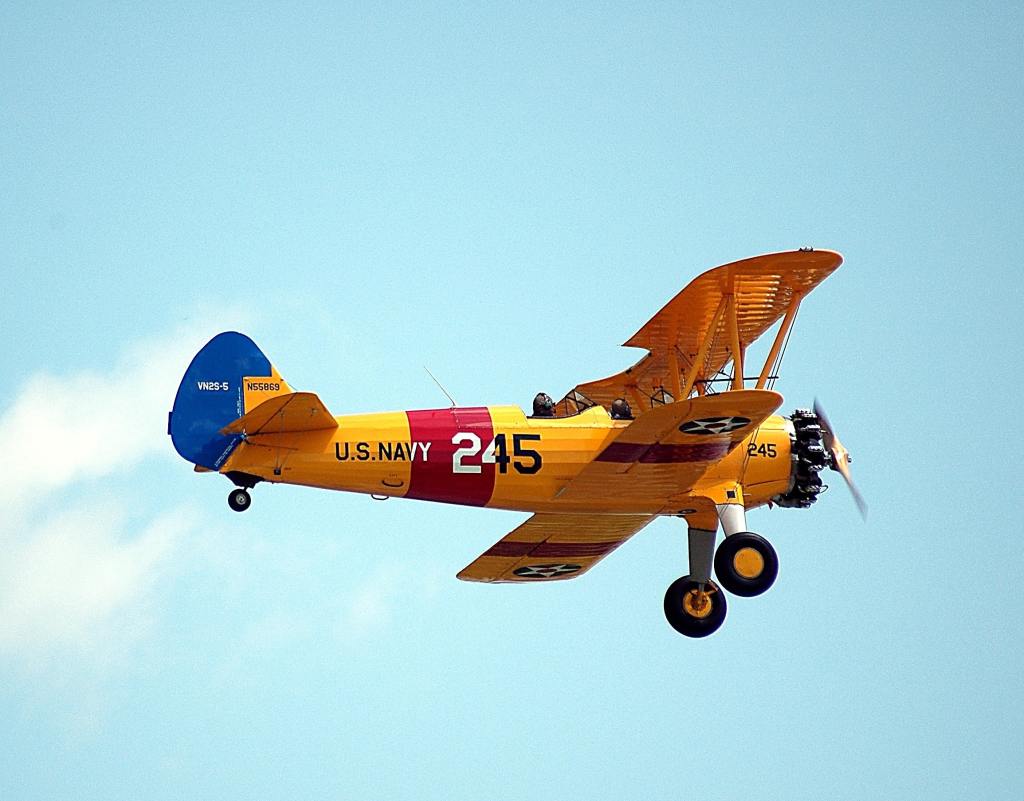
One thing has surprised me though – I have to research! I, naively, thought that you really only needed to do research if you were writing a non-fiction book, a biography, or perhaps historical fiction in order to get the details correct to the period. I didn’t think the 30s and 40s were that…historical. Turns out they are. I’ve found myself researching things like prom dresses in the 40s – lots of pastel colors, cap sleeves and big tulle skirts and gardenia corsages. I had to read a history of Gallaudet University to understand the campus layout of the then Gallaudet College in the late 40s and early 50s. I’ve looked up the most popular songs of the 30s and 40s (Cheers to Glenn Miller, Kay Kyser and Frank Sinatra). And cars, everything from Packards to Plymouths to Pontiacs. One of the most enjoyable things, though, was researching small airplanes (one of my characters is an amateur pilot). I found a great plane to include in my story – the Boeing Stearman Model 75 biplane. It’s a bright yellow, with a dual, open cockpit where the pilot sat in the rear – it was known as a taildragger. Best of all, it was used for training pilots in WWII – something the aviator character is hoping to be. I’ve watched several videos of it in flight and it’s a thing of beauty buzzing by in the air like a yellow wasp.
One of the most poignant things to research was the role of Deaf Americans in the military. They were excluded from the service, although some clever young men fooled the powers that be for a little while. It was frustrating and depressing – they wanted to serve their country like their hearing compatriots. Instead, many of them held jobs in factories or other industries that supported the war. However, there were some children of Deaf adults (CODAs) that served as code speakers using ASL (American Sign Language). The Deaf are still banned from military service which is unfortunate – there are so many non-combat roles that could be filled by a Deaf person, the military is a good career path, but currently closed to the Deaf.
I’m moving into the 50s shortly, and even though I was born in the late 50s, I’ll probably still have to do some research – I’m thinking toys for my main character’s child would be a fun one. Maybe I’ll dig into Play-Doh, Tinkertoys, or a View-Master…then there’s television shows (hello Ozzie and Harriet, Dragnet, and Gunsmoke!), and more music. Research is actually a lot of fun.
 J. Gardner Hurd