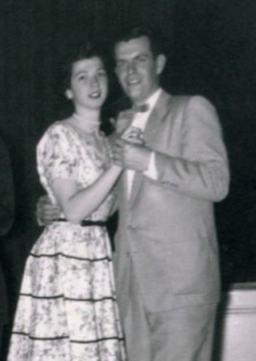
Deaf community groups tend to spring up around deaf schools. It’s something that connects deaf people beyond their graduation from school. In my parents’ case, a deaf club was how they met. In the 40s through the 80s, the deaf clubs were really active – they had dances (I know I’ll explain that later), softball and basketball teams, outings, movie nights (captioned), and Christmas parties. My parents loved these get-togethers. They went to as many as they could. If it was a family event, my brother and I went too. When we were little, it was fun. As I got older, it became more of a chore. Many of my parents’ friends’ children were deaf. My brother and I were hearing. We often felt like fish out of water. It was only as I got older that I began to understand how my parents must have felt at every non-deaf event.
For my parents, those social gatherings were an essential part of their lives – it was the primary social connection for them after family. And in some ways, it was even more important than family. I never thought much about it as a kid, but none, not one, of my hearing family could sign. My parents did the best they could at family get-togethers, but conversation moves so fast, and in shorthand sometimes that my parents most likely picked up very little of it. They would smile and nod (my clue to when they didn’t understand something), laugh, eat, and participate as best they could. But it was really only with their deaf friends that they could connect on the most basic level of humans – with a common language that was readily understood. It was only with their deaf friends that they felt at home.
This was something I didn’t really understand until I was older. I complained to my parents about why they never really taught me much in the way of sign language – I can fingerspell, and I know enough sign to get by, but I’m not fluent. My dad said that when he was in school, sign language was banned. They would use it on the playground or out of the teachers’ sight, keeping their hands small, hidden away. And their families didn’t approve of it because the schools didn’t. So they painstakingly learned how to speak – my parents were lucky, their speech was pretty good. And they lipread – which is notoriously unreliable. If you’ve ever seen the NFL’s “Bad Lip Reading” videos, you’ll know what I mean.
My parents are gone, most of the rest of my family is gone. The times are different now. I wonder how much more of a connection my family would have had if we all could sign. How much more comfortable and understood my parents would have felt if we could all sign. So much of what I see and read about now mentions that hearing relatives (and friends) learn to sign to connect to deaf family members. And I wonder how my parents did it – kept showing up at all the family gatherings, with smiles on their faces, love in their hearts for people they loved and loved them back, but had no common language.
P.S. So about dancing for the deaf. If you have a good sound system (or a band) that allows the bass to really reverberate, the vibrations you feel on the dance floor give you the beat. My father was an amazing dancer – everyone clamored to dance with him.
 J. Gardner Hurd